

Deepinder Goyal, Zomato & Blinkit — The Viral “Temple” Wearable, Brain Health Tech, and What It All Means
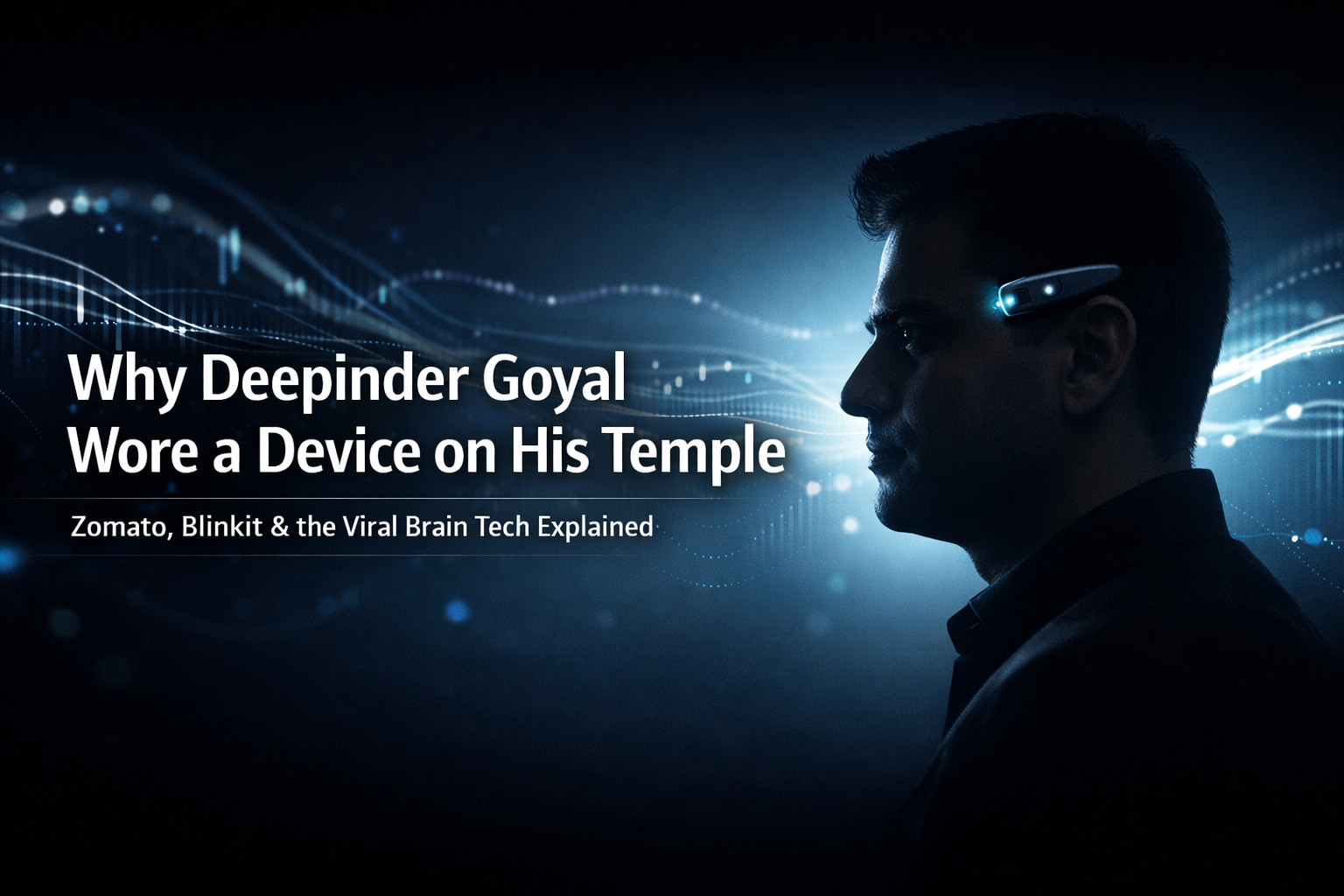
Deepinder Goyal, founder of Zomato and Blinkit, was seen wearing a device called Temple during a podcast appearance. Temple is a research wearable designed to study blood flow related signals around the brain. It is not a consumer product or medical device and is part of Goyal’s privately funded research initiative exploring brain health and ageing.
The device went viral due to public curiosity, sparking discussions around wearable health tech, longevity research, and founder-led experimentation.
If you have been active on Twitter, LinkedIn, or YouTube recently, you saw clips of Deepinder Goyal, the founder of Zomato and the man behind Blinkit, wearing a small metallic device on his temple.
It happened during his appearance on the Figuring Out podcast, and almost immediately, people started asking questions.
What is that device?
Is it medical?
Is it a new startup?
Is Zomato or Blinkit launching something new?
Is this about brain health, blood flow, or longevity?
This article breaks down everything we know so far, without hype, but also without missing any important detail.
Who Is Deepinder Goyal and Why People Care
Deepinder Goyal is not just another startup founder.
He built Zomato into one of India’s largest consumer tech companies and later expanded the ecosystem with Blinkit, Hyperpure, District and more under the Eternal group structure.
So when someone like him experiments publicly with a new technology, especially something related to health, brain function, or ageing, people naturally pay attention.
That curiosity is exactly why this device went viral.

Kojic Acid Brightening Body Wash - Wildoak
The Device on His Temple: What Was It Exactly?
During the podcast, viewers noticed a small clip‑like metallic device attached near his temple, close to the side of his head.
At first, people assumed it was:
-A microphone
-A hearing aid
-Some kind of wireless ear device
-But it was none of those.
The device is called Temple.
What Is “Temple” and What Does It Measure?
Temple is a research‑grade wearable device that is designed to track blood flow related signals around the brain area, specifically near the temple region.
The core idea behind the device is to study cerebral blood flow patterns over time.
In simple words, it tries to understand:
-How blood flow to the brain changes
-How posture, movement, and daily habits may affect it
-Whether long‑term patterns can tell us something about brain health and ageing
It is important to be very clear here.
This is not a consumer health gadget.
It is not a medical device approved for diagnosis.
It is not a replacement for MRI, CT scans, or clinical neurological tools.
It is a data‑collection experiment.
The Bigger Idea Behind Temple: The Gravity Ageing Hypothesis
Deepinder Goyal has spoken about something he calls the Gravity Ageing Hypothesis.
The idea is fairly simple, even if the science is still evolving.
Humans spend most of their lives upright.
Over decades, gravity constantly pulls blood downward.
The hypothesis suggests that this might affect how efficiently blood reaches the brain as we age.
Temple exists to observe and collect data, not to prove anything conclusively yet.
This distinction matters because:
-It explains why this is research, not a product
-It explains why there are no bold medical claims
-It explains why experts say more validation is needed
Is Temple a Zomato or Blinkit Product?
No.
Temple is not a Zomato product.
It is not a Blinkit product.
It is not being built or sold by Eternal.
This project is tied to Deepinder Goyal’s personal research initiative, separate from his listed businesses.
Reports suggest that he has invested around $25 million (roughly ₹200+ crore) of his own capital into this research effort.
That alone tells you this is not a casual side project.
Is Temple a Startup? Has It Launched?
As of now:
Temple is not commercially launched
There is no confirmed product price
There is no consumer app or public sales plan
There is no timeline for retail availability
It may eventually become a startup.
It may remain a research initiative.
It may influence future health tech ideas.
All three are possible.
Right now, it sits firmly in the research and experimentation phase.

5% Benzoyl Peroxide Acne Wash for Face & Body- Clears Body Acne Fast
What Doctors and Medical Experts Are Saying
Not everyone is convinced, and that is expected.
Many doctors and neurologists have pointed out that:
True cerebral blood flow measurement requires advanced clinical tools
Wearables can only capture indirect or surface‑level signals
Without peer‑reviewed clinical trials, claims must be treated cautiously
Some experts have openly said that such devices should not be confused with medical diagnostics.
At the same time, even critics acknowledge one thing.
Collecting long‑term data at scale can sometimes lead to new insights, even if early versions are imperfect.
Why the Internet Went Crazy Over It
Beyond the science, the moment went viral because:
-A well‑known founder was wearing something unusual
-No explanation was given immediately
-People love mystery combined with tech and health
Memes followed.
Speculation exploded.
Searches for “Deepinder Goyal temple device”, “Zomato CEO brain device”, and “Temple wearable” shot up.
From a visibility standpoint, it was a perfect storm.
What This Means for Wearable Health Tech
Whether Temple succeeds or not, it highlights a few important trends:
-Founders are increasingly investing in deep tech and health research
-Wearables are moving beyond steps and heart rate
-Brain health and longevity are becoming mainstream conversation topics
-Personal experimentation by influential leaders drives massive curiosity
Temple might not become the next Apple Watch.
But it has already succeeded in one way.
It made people talk seriously about brain health data.
Final Thoughts
Deepinder Goyal will always be closely associated with Zomato and Blinkit.
But moments like this show a different side of modern founders.
Curious.
Experimental.
Willing to explore ideas that sit far outside their core businesses.
The Temple wearable is not a product yet.
It is not medical advice.
It is not proven science.
It is a research experiment backed by capital, curiosity, and a willingness to ask uncomfortable questions about ageing and brain health.
And sometimes, that is how meaningful innovation starts.
Frequently Asked Questions About Deepinder Goyal’s Temple Device
Ques. 1. What was the device Deepinder Goyal wore on his temple?
The device is called Temple. It is a research wearable designed to study blood flow related signals around the brain and is part of a personal research initiative by Deepinder Goyal.
Ques. 2. Is the Temple device a Zomato or Blinkit product?
No. Temple is not associated with Zomato or Blinkit. It is not a commercial product and is separate from Goyal’s businesses.
Ques. 3. What does the Temple wearable measure?
Temple aims to collect data related to blood flow patterns near the brain, helping researchers study potential links between posture, ageing, and brain health.
Ques. 4. Is the Temple device medically approved?
No. It is not a medical diagnostic device and is not approved for clinical use. It is intended for research and data collection only.
Ques. 5. How much has Deepinder Goyal invested in this project?
Reports suggest that Deepinder Goyal has invested approximately $25 million of his personal capital into this research initiative.
Ques. 6. Will the Temple wearable be sold to consumers?
As of now, there is no confirmed launch date, pricing, or consumer availability for the Temple device.