

Best Kojic Acid Soap and Body Wash for Pigmentation and Dark Spots in India
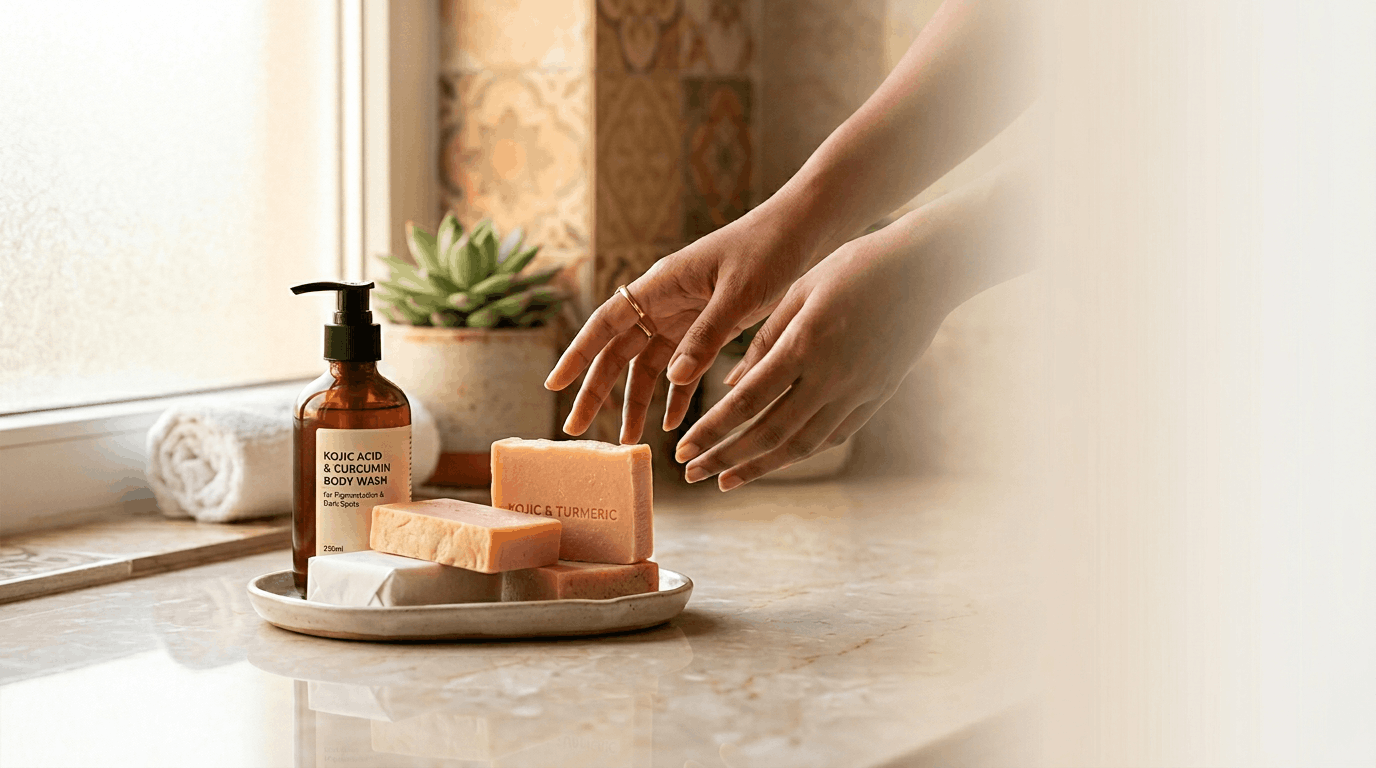
Kojic acid has become one of the most talked‑about ingredients for pigmentation and dark spots in India, but not all kojic acid soaps and body washes are created equal. In this guide, we’ll break down the best ways to use kojic acid for face vs body, how to choose a good formula, and what precautions to keep in mind during pregnancy.
What Is Kojic Acid and How Does It Work?
Kojic acid is a skin‑brightening ingredient derived from fungi and a by‑product of fermenting rice and soy. It helps reduce pigmentation by blocking tyrosinase, an enzyme involved in melanin production, so over time dark spots and uneven tone can look lighter. Because of this, it is commonly used in soaps, face washes, serums, and body washes targeted at tanning, melasma, acne marks, and sun spots.

Wild Oak Kojic Acid Brightening Body Wash
Face vs Body: Where Kojic Acid Works Best
The skin on your face and body is different, and kojic acid products should be chosen accordingly.
-Face: Facial skin is thinner, more sensitive, and more exposed to sun and pollution. For most people, daily use of high‑strength kojic acid soap on the face can be too harsh, leading to dryness, redness, or irritation.
-Body: Areas like arms, legs, back, and underarms have thicker skin and often more stubborn pigmentation from tanning, friction, or body acne scars. Here, a kojic acid body wash or soap can usually tolerate a slightly stronger formula and more frequent use.
Because of this, many dermatologists recommend using gentler, creamier kojic acid cleansers on the face and slightly more active formulations on the body, always paired with good moisturiser and sunscreen.
How to Choose the Best Kojic Acid Soap or Body Wash in India
When you’re looking at shelves or scrolling online, keep these factors in mind:
-Concentration and combo: Look for kojic acid paired with niacinamide, alpha arbutin, vitamin C, or licorice for better brightening with fewer side effects, instead of very harsh “extra strong whitening” formulas.
-pH and texture: A creamy, low‑foam formula is usually more barrier‑friendly than a very stripping bar that leaves your skin feeling tight.
-Added hydrators: Glycerin, panthenol, ceramides, and soothing botanicals (like aloe, oatmeal, green tea) help balance the drying effect of kojic acid.
-Fragrance and essential oils: If you have sensitive or acne‑prone skin, avoid heavily fragranced bars or body washes that can trigger irritation or body acne.
If your goal is everyday maintenance and a slow, even brightening, it is safer to pick a gentle kojic‑based product that you can actually stick to, instead of a harsh formula that you have to stop after a week.

Wild Oak's 96% Snail Mucin Hydrating Serum
Best Ways to Use Kojic Acid for Face
For the face, think “short contact, low strength, high moisture”.
Frequency: Start with 2–3 times a week at night; if your skin tolerates it well, you can gradually move to once daily.
Contact time: Lather the kojic acid cleanser in your hands, massage gently for 20–30 seconds, and rinse off—do not leave it on like a mask.
Pairing: Follow up with a hydrating toner or serum and a non‑comedogenic moisturiser to protect your barrier.
Sun protection: Always use broad‑spectrum sunscreen during the day; any brightening routine without SPF will worsen pigmentation over time.
People with sensitive skin, active acne, rosacea, or eczema should be extra cautious and may be better off using kojic acid only on spots or switching to lower‑irritation ingredients like azelaic acid or niacinamide as recommended by a dermatologist.
Best Ways to Use Kojic Acid for Body (Arms, Legs, Neck, Back and Underarms)
Body pigmentation in India often comes from sun exposure, body acne, friction from clothing, hair removal, and hormonal changes. Kojic acid body soaps and washes can help with:
-Suntan on arms and legs
-Dark knees, elbows, neck
-PIH (marks) from back and shoulder acne
-Underarm darkness due to friction and shaving
Usage tips:
Frequency: Once daily is usually okay for most body areas; start slowly on very sensitive zones like underarms or bikini area.
Contact time: Leave the lather on the skin for around 30–60 seconds, then rinse thoroughly.
After‑care: Always apply a body lotion with niacinamide, lactic acid, or ceramides afterward to keep the barrier healthy.
Combined routine: For stubborn body pigmentation, many routines pair kojic acid washes with gentle weekly body exfoliation and daily sunscreen on exposed areas.
If you experience stinging, burning, or intense dryness, cut down the frequency or switch to alternate days.

2% Kojic Acid Glow Serum – For Dark Spots, Hyperpigmentation & Brighter Skin
Pregnancy Precautions with Kojic Acid
Pregnancy and breastfeeding dramatically change hormones, and many people notice darkening of the neck, underarms, inner thighs, and face (melasma). But this is also the phase where you must be extra careful with actives.
Current evidence and general dermatology practice consider kojic acid “relatively low risk” in topical form, but there is limited high‑quality human safety data in pregnancy, especially for high‑strength leave‑on products. Most doctors recommend:
-For face: Avoid strong leave‑on kojic acid creams and serums during pregnancy unless your dermatologist specifically approves them for you.
-For body: Mild, rinse‑off kojic acid cleansers are often considered safer than leave‑on products because contact time is short and absorption is low, but you should always check with your gynaecologist/dermatologist first.
-Focus on basics: Gentle, fragrance‑free cleansers, rich moisturisers, and strict mineral or pregnancy‑safe sunscreen do most of the heavy lifting for pigmentation prevention in this phase.
-Postpartum plan: Deep treatment of melasma and stubborn pigmentation is usually safer and more effective after delivery and breastfeeding, when more actives (like stronger acids, retinoids, and higher‑dose kojic acid) may be re‑introduced under medical supervision.
Never self‑prescribe any “whitening” creams during pregnancy—many over‑the‑counter products in India still mix multiple strong actives and sometimes steroids.

Korean Rice Face Scrub for Glass Skin, Brightening & Anti Wrinkles
Side Effects of Kojic Acid and When to Stop
Kojic acid is effective but can be irritating when overused or used at very high concentrations.
Watch out for:
-Burning, stinging, or intense redness
-New breakouts or rashes
-Flaky, tight, or itchy skin
-White or very light patches compared to surrounding skin
If you notice these:
-Stop the product immediately.
-Switch to a bland, fragrance‑free cleanser and moisturiser.
-Avoid other actives (like strong vitamin C, AHAs/BHAs, retinoids) until your skin calms down.
-See a dermatologist if irritation persists longer than a few days.
Remember: the goal is even tone and healthy barrier, not overnight whitening.
Building a Kojic‑Safe Routine for Indian Skin
Here is a sample structure you can adapt (non‑pregnant, normal to oily skin):
Morning
-Gentle cleanser
-Hydrating serum (niacinamide/HA)
-Lightweight moisturiser
-Broad‑spectrum sunscreen (reapply every 2–3 hours outdoors)
Night (2–4 times a week)
-Kojic acid face wash (short contact, rinse off)
-Barrier‑supportive serum or moisturiser
Body (daily)
-Kojic acid body wash on areas with pigmentation (arms, legs, back, neck)
-Hydrating body lotion with niacinamide or lactic acid
On other nights, use a very gentle cleanser and extra moisturising products to keep your skin comfortable.